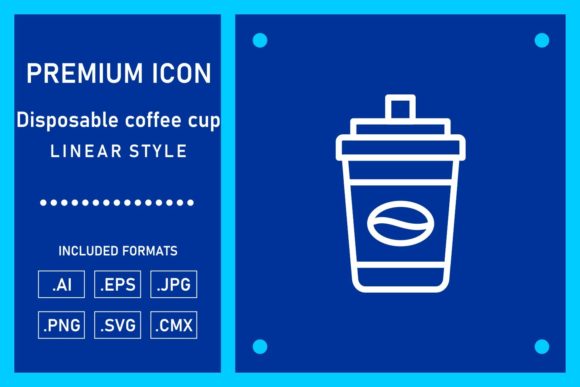
Disposable Coffee Cup Icon
A Designer’s First Glance: Clean, Wry, and Instantly Recognizable
When I opened the Disposable Coffee Cup icon for the first time, my eye landed not on technical specs—but on tone. It’s got that quiet confidence of a well-drawn symbol: no clutter, no forced cuteness, just the essential curve of a cup with a lid and a subtle steam curl. It reads as modern but approachable—like the kind of design you’d embroider onto a barista’s apron or a coffee roaster’s tote bag without second-guessing its vibe. As an embroidery designer who’s stitched hundreds of icons, I immediately pictured it scaled down to 2.5 inches on a linen tea towel—and it held up in my mind’s eye. That tells me something important: this isn’t just vector art for screens. It has *embroiderability* built into its silhouette.
Real-World Stitch Test: Tote Bag, Not Just Mockup
Last week, I prepped a custom embroidered tote for a local café pop-up—cotton canvas, medium weight, light stabilizer. I converted the Disposable Coffee Cup from SVG to an embroidery file using my standard workflow (no auto-trace needed—the vector paths were clean and closed). At 3 inches wide, the lid line stayed crisp, the cup body held its shape in satin stitch, and the steam element translated beautifully as a delicate running stitch accent. Customers noticed it—not as “a logo,” but as a quiet nod to shared ritual. That’s the sweet spot: when an icon feels intentional, not generic. It worked especially well alongside hand-lettered text (“Brewed Daily”), proving it plays nicely with other design elements instead of competing.
Where It Shines—and Where to Pause
The Disposable Coffee Cup is strongest on stable, medium-to-heavy fabrics: denim jackets, canvas totes, cotton aprons, and structured pillow covers. On baby onesies? Yes—but only if you reduce size to 1.75" max and use lightweight tear-away stabilizer. On stretchy fabric like jersey tees? Proceed with caution: test stitch density first. Too much fill stitch in the cup base can cause puckering; I dropped the density by 15% and added a layer of cutaway + topping for clean results.
It’s not ideal for curved surfaces like caps unless you’re using a cap frame and reducing height to under 1.5". The lid detail starts to blur at that scale on dense foam. And while the vector files include CMYK color guides, remember: thread colors behave differently than screen colors. A warm beige thread on dark fabric reads richer than the same RGB preview suggests—so always test thread color contrast on scrap fabric before committing.
Small Hoop, Big Clarity
I ran it in a 4x4 hoop without re-hooping—clean layout, centered spacing, no awkward cropping. That matters when you’re stitching 30+ units for a craft fair. No tiny lettering or fragile interior lines to snag or break, which means fewer restarts and less thread waste. For Etsy sellers bundling digital embroidery files, this is low-friction inventory: one design, multiple reliable applications.
What It Adds to Your Finished Product
Embroidery isn’t just decoration—it’s trust. When someone sees a cleanly stitched Disposable Coffee Cup on a handmade kitchen towel, they read craftsmanship, attention to detail, and brand cohesion—even if it’s a single icon. It elevates a plain item into a personalized gift or boutique product. I’ve used it on holiday gift sets (coffee + cookie tote + embroidered mug sleeve) and seen repeat customers specifically ask for “that little cup design” again. That kind of recognition doesn’t happen with overworked or pixelated graphics.
For small shop owners and craft business operators, it supports consistency across physical and digital touchpoints: same icon on your embroidered apron, your website banner, and your printable mockup for social posts. Because it’s vector-based, resizing between formats is seamless—no jagged edges, no redraws.
Designer Notes You’ll Actually Use
- Always test on scrap fabric first—especially if pairing with applique or layered stitches.
- Review stitch density: high-fill areas (cup base) may need slight reduction on textured or thin fabrics.
- Confirm hoop size compatibility before batching—this design fits comfortably in 4x4 and 5x7 hoops.
- Inspect small details in black-and-white mockups: steam curl and lid seam should remain legible at 2” scale.
- Compare performance on light vs. dark fabric backgrounds—some thread brands mute subtle gradients.
- Use appropriate stabilizer: cutaway for knits, tear-away for stable wovens, topping for napped fabrics like terry cloth.
- Verify licensing terms before selling finished items or digital embroidery files—this asset is labeled for banners, websites, apps, and signs, but commercial embroidery use requires confirmation.
Final Thought: Less Is Still More—Especially When It’s Stitched
There’s a quiet power in restraint. The Disposable Coffee Cup doesn’t try to be clever or cutesy. It’s a functional, friendly, flexible icon—designed for real materials, real machines, and real people who appreciate handmade care. Whether you’re an Etsy seller building a cohesive product line, a café owner branding staff gear, or a crafter stitching personalized gifts, it delivers clarity without compromise. It won’t shout—but it will be remembered. And in embroidery, that’s the highest compliment.